For many years, meat was not an everyday food for many Ghanaians. It was something families enjoyed during celebrations and religious holidays.
But Ghana is changing.
“Urbanization is speeding like a jet fighter,” says Emmanuel Fiagbey, executive director of Communication Initiatives for Change, a member of the Johns Hopkins Center for Communication Programs global network.
As cities grow and incomes rise, eating patterns are changing too. Many people who never ate much meat are consuming more. Fiagbey points to one striking sign of that shift: dozens of truckloads of cattle arrive in Accra each day from across West Africa, a reflection of how quickly diets are changing.
That change is happening alongside another one. Noncommunicable diseases, including heart disease, stroke, diabetes, and obesity, account for a growing share of deaths in Ghana.
Communication Initiatives for Change is working with CCP, the Johns Hopkins Center for a Livable Future (CLF) and Meatless Monday, to adapt the global campaign for Ghana. Meatless Monday encourages people to choose meals without meat one day a week, for the health of people and the planet. As the movement has spread around the world, communities have adapted it to reflect their own cultures, food traditions and health priorities.
The work is part of a broader effort in which CCP is supporting partners in Ghana, South Africa and Indonesia to shape Meatless Monday around local contexts.
The campaign was founded in 2003 by Sid Lerner in partnership with CLF, which has helped provide the scientific foundation behind the effort. As the campaign spread to communities around the world, it became clear that success would look different in different places.
Beginning in 2016, CCP brought its expertise in social and behavior change communication to help countries adapt the campaign to their own contexts. The work evolved through research, collaboration and a process of learning and adaptation, as CCP and its partners worked to understand what it would take for Meatless Monday to succeed in different settings.
In Ghana, that has meant starting with what people already know.
The team began by listening to communities and identifying the groups that could help make the effort sustainable, including universities, faith-based organizations, young people, culinary professionals, and businesses.
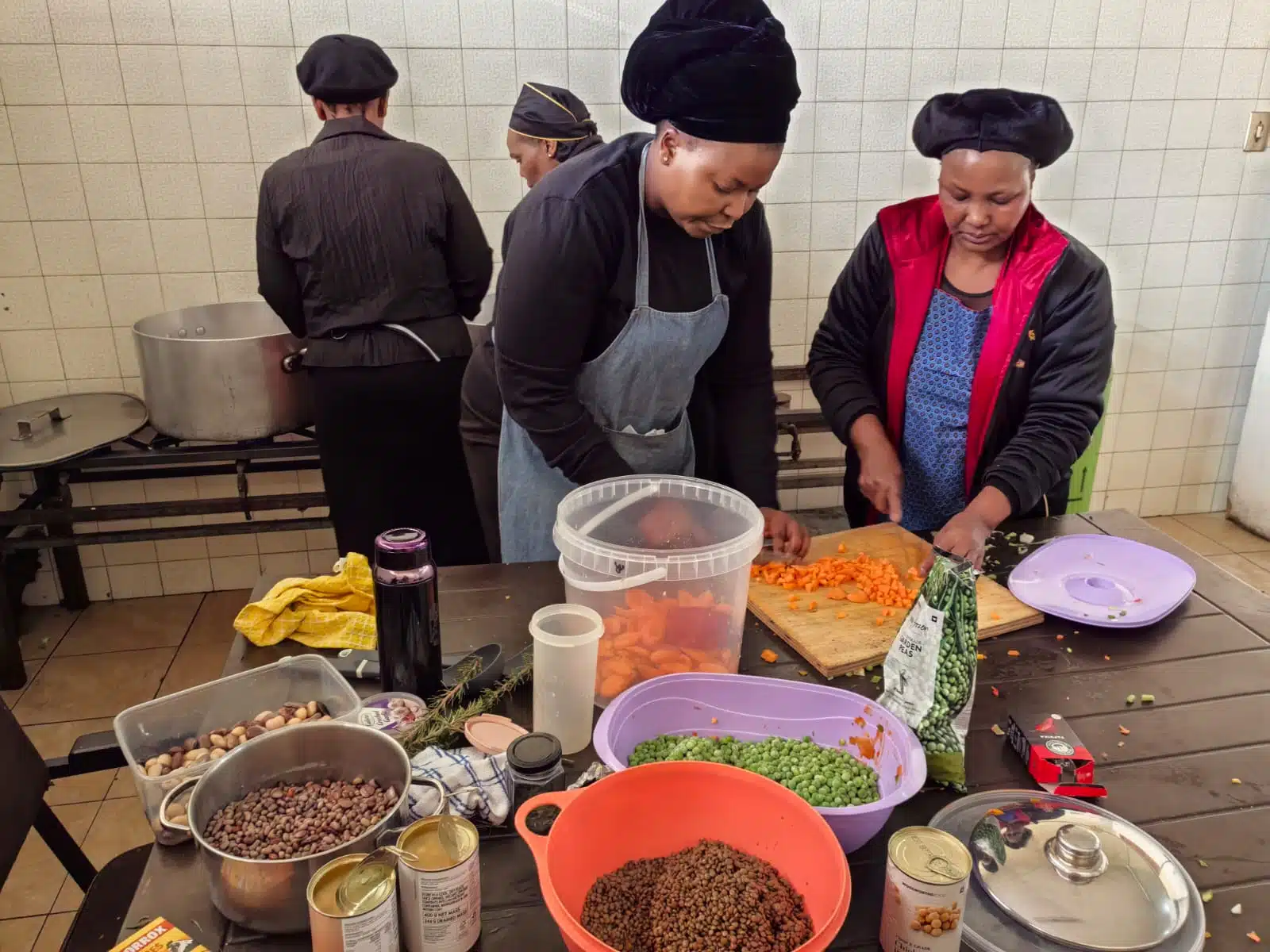
When people asked what they should eat instead of meat on Mondays, the answer came from Ghanaian kitchens. The team worked with local chefs to identify dishes that could be prepared without meat, creating a booklet featuring foods from across the country.
The first Ghana Meatless Monday guide included 41 pages of meatless recipes. A new edition has expanded to 88 pages, featuring dishes from different regions and cultures.
“The audiences started asking: If you do not want us to eat meat on Mondays, then what dish is there that you will suggest for us to eat?” Fiagbey says.
The work has also meant building support among institutions that can help sustain the campaign beyond individual choices.
One focus has been the private sector, where workplace cafeterias offer an opportunity to make healthier meals part of everyday routines. That has not always been easy. Some businesses, particularly those connected to the culinary industry, have viewed Meatless Monday as a threat rather than an opportunity.
“Meatless Monday does not mean don’t eat meat at all,” Fiagbey notes.
Instead, the campaign encourages people to rethink how often meat appears on their plates and consider alternatives.
Similar efforts are underway across the three countries where CCP is supporting Meatless Monday, with partners exploring how schools, workplaces, and other institutions can help make the practice part of everyday life.
One company that has embraced the idea in Ghana is HPW Fresh and Dry, a fruit company with more than 1,000 employees. The company provides two hot meals a day for its workers through its workplace canteen and, after learning about Meatless Monday, it began working with the team to explore how meat-free meals could become part of its Monday offerings.
For Andrea Anschel, who leads the work for CCP, the appeal of Meatless Monday is its simplicity.
“One of the low-hanging fruits of this whole project is it’s just one day a week,” she says. “We all can do that.”
That simple approach has helped the campaign take hold in Ghana and other countries where it is being implemented. A weekly change feels achievable, and over time it can become part of a larger shift in how people think about food.
The lessons from Ghana are now helping shape the next phase of Meatless Monday’s global expansion.
In this latest phase, Meatless Monday has partnered with CLF and CCP to help countries build locally driven approaches using social and behavior change strategies. CCP was recently awarded a third phase of funding to continue supporting the work, with a focus on building the systems, resources and local leadership needed to sustain the initiative beyond the life of the project.
Ghana, Indonesia and South Africa are now serving as regional hubs, sharing lessons and resources through peer learning exchanges and helping neighboring countries explore how Meatless Monday can work in their own communities.
The goal is not to create one model that looks the same everywhere. It is to build a network where communities can learn from one another and develop approaches that fit their own realities.
“People can’t just take Meatless Monday off the shelf and know exactly what to do with it,” says Becky Ramsing, a senior program officer at the Center for a Livable Future. “In different countries and communities, it means different things. The guidance, the examples, the stories—those are what help partners shape it to fit their own context.”
For Meatless Monday’s Dana Smith, the future of the campaign depends on communities continuing to make it their own.
“The hope is that Meatless Monday becomes decentralized and other campaigns, initiatives and NGOs carry Meatless Monday far beyond what we could ever do from the hometown headquarters,” she says.